California concussion education · desk no. 04
The scan is often normal. The injury is not.
Most concussions never show on a CT or MRI. That gap — between a real injury and a quiet scan — is where claims get lost. This desk explains concussion mechanics, symptom documentation, and how the evidence file should be built. No invented numbers, no advice dressed as information.
Symptoms after a head injury can be a medical emergency — call 911 for loss of consciousness, repeated vomiting, or worsening headache. This site does not give medical or legal advice.
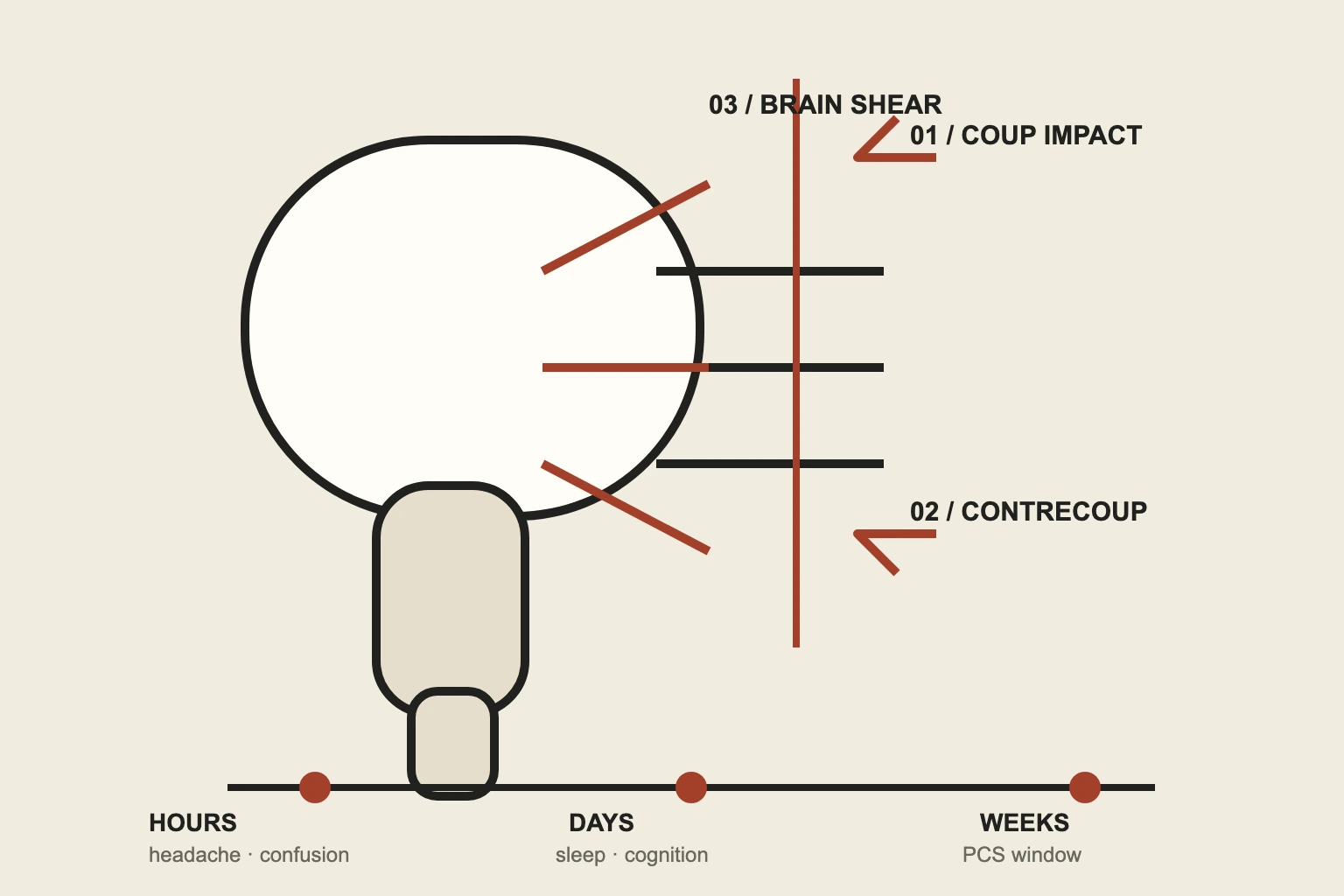
A calmer way to read the file.
Start with the mechanics, then follow the record: symptoms, activity changes, care, and the timeline that connects them.
Read the red flags first.
Concussion education cannot replace urgent medical evaluation. Seek emergency help for danger signs after a head injury.
Urgent
Worsening symptoms
Repeated vomiting, a worsening headache, seizure, slurred speech, unusual confusion, or increasing drowsiness warrant emergency attention.
Record
Write what changed
Note the time, activity, symptom, intensity, and what made it better or worse. A contemporaneous record preserves sequence.
Boundary
Information, not advice
This desk explains public sources. A qualified clinician evaluates an injury; a qualified lawyer evaluates a legal claim.